A Yogic & Ayurvedic Diet Guide for Diabetes
In my twenty years of working with students — on the mat and in the kitchen — I have seen one truth play out again and again. What we eat is not just fuel. It is medicine. When someone comes to me with a diabetes diagnosis, the conversation rarely starts with test reports or medicines. It starts with their daily plate.
From a yogic perspective, diabetes is not simply a condition of elevated blood sugar. It is a signal that Agni — our digestive fire — has become weak and imbalanced, and that our cells have gradually lost their ability to receive nourishment properly. In Ayurveda, almost every chronic condition, including diabetes, is rooted in a compromised Agni. When digestion is sluggish, undigested matter — called Ama — accumulates in the tissues and channels of the body, blocking the action of insulin at the cellular level. The yogic approach to healing is therefore never about restriction alone. It is about rekindling the fire first, so that everything you eat can actually be used.
Know Your Constitution Before You Begin
Before we talk about what to eat, we need to talk about who is eating. Ayurveda recognises that no two bodies are identical. Your Prakriti — your body constitution — determines how you digest food, how you respond to stress, and which imbalances you are most prone to. Diabetes does not look the same in every body, and neither does the path back to health.
Kapha-dominant individuals are the most commonly affected by Type 2 diabetes. Kapha types tend to have a slower metabolism, heavier build, and a natural tendency toward weight gain and sluggishness. Their Agni is characteristically slow (Manda Agni), which means food takes longer to digest and sugar is processed less efficiently. For Kapha types, the priority is to actively stimulate digestive fire, reduce sweet and heavy foods, and favour light, warm, spiced meals.
Vata-dominant individuals can develop diabetes too, particularly in older age, and their experience is quite different. Vata types tend to be thin, anxious, and prone to irregular eating habits — skipping meals, eating cold or raw foods, and having erratic digestion (Vishama Agni). For them, regularity, warmth, and grounding foods are essential. Their diet needs nourishment and stability, not further restriction.
Pitta-dominant individuals have a naturally strong digestive fire (Sama or Tikshna Agni), but excess Pitta — often triggered by stress, competition, and inflammatory foods — can damage the pancreatic tissue over time and impair insulin production. Pitta types benefit from cooling, bitter, and anti-inflammatory foods while still keeping their digestion strong.
Understanding your constitution does not mean following three completely different diets. It means knowing where to place your emphasis, which we will weave in throughout this guide.
How to Rekindle Digestive Fire — Agni Deepana
Before your body can benefit from any food, Agni must be working. A weak digestive fire means even the healthiest meal passes through incompletely, feeding Ama rather than nourishing your cells. Here is how to build it back, gently and consistently.
Start your morning with warm water. Not room temperature, not cold — warm, almost hot. This is the single simplest thing you can do each day. Warm water flushes the digestive tract, softens accumulated Ama from the night, and signals the body to begin digestion. Add a squeeze of lemon and a pinch of rock salt for a light electrolyte boost. Kapha types can add a thin slice of fresh ginger. Vata types benefit from a small amount of raw honey (never heat honey in Ayurveda). Pitta types can add a few fresh mint leaves to keep it cooling.
Use the Trikatu formula. Trikatu is a classical Ayurvedic preparation of three pungent herbs — dry ginger (Sunthi), black pepper (Maricha), and long pepper (Pippali). A small pinch of Trikatu powder with warm water before meals powerfully ignites Agni. It is especially beneficial for Kapha types but useful across all constitutions in moderate amounts. If you cannot source Trikatu, simply adding fresh ginger and black pepper to your cooking achieves a similar effect.
Eat a small piece of fresh ginger with rock salt and lemon before your main meal. This is a traditional Ayurvedic practice called Deepana — literally meaning to kindle the lamp. It stimulates the secretion of digestive enzymes, primes the stomach acid, and improves absorption of nutrients from the meal that follows. For Kapha types especially, this is non-negotiable. Do this ten minutes before lunch every single day and notice the shift in your digestion within two weeks.
Spice your food intentionally, not just for flavour. Cumin, coriander, fennel, turmeric, mustard seeds, and ajwain are not just kitchen spices — they are digestive medicines. Cumin seeds tempered in a little ghee at the start of cooking improve digestion across all doshas. Fennel after meals reduces bloating and supports assimilation. Ajwain is particularly powerful for Vata types who struggle with gas and irregular digestion. Turmeric, used daily, reduces intestinal inflammation and supports healthy insulin response — this is now well supported by modern research as well.
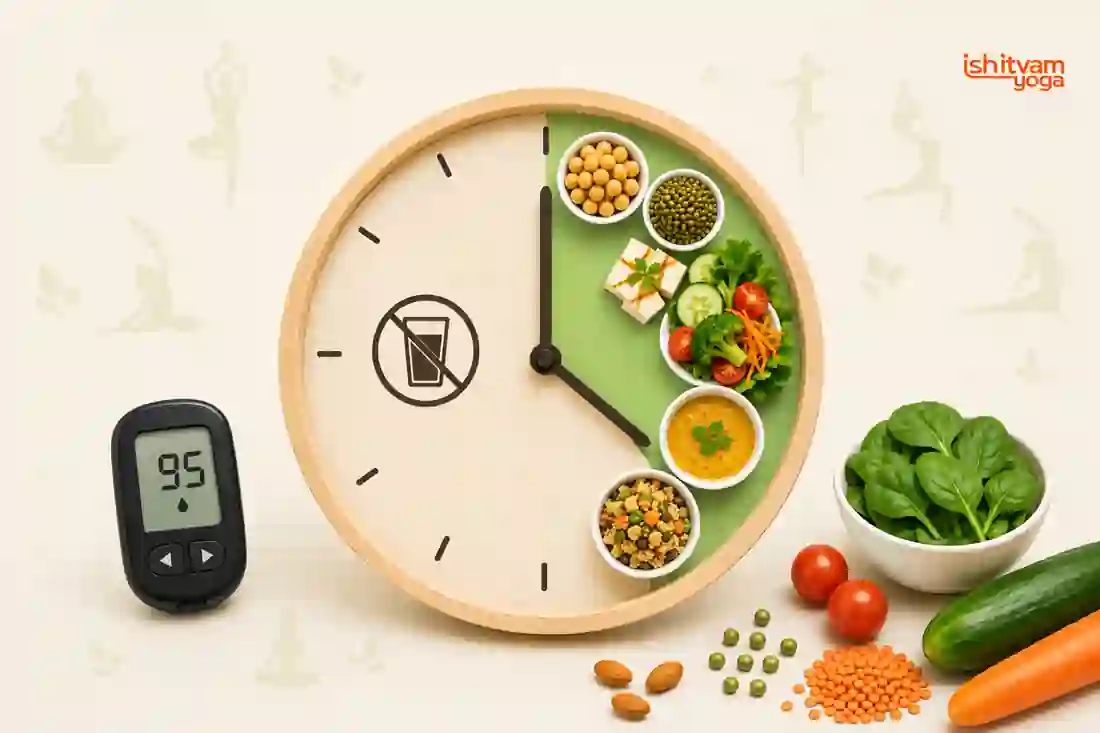
Eat your largest meal at noon. The body's digestive fire mirrors the sun. It rises in the morning, peaks at midday, and winds down in the evening. Eating a heavy dinner when Agni is at its lowest is one of the most common contributors to poor blood sugar control and weight gain. Shift your heaviest, most complex meal to lunch and keep dinner light and early. This one change alone, practised consistently, can improve fasting glucose within weeks.
Avoid cold drinks and ice with meals. This is one of the most important — and most ignored — pieces of Ayurvedic wisdom. Cold liquids during or immediately after meals douse the digestive fire, just as pouring cold water over a flame. Drink warm water or herbal teas with your meals. This applies to all constitutions, but especially to Kapha and Vata types.
The Ayurvedic Wisdom of Shadrasa — Six Tastes
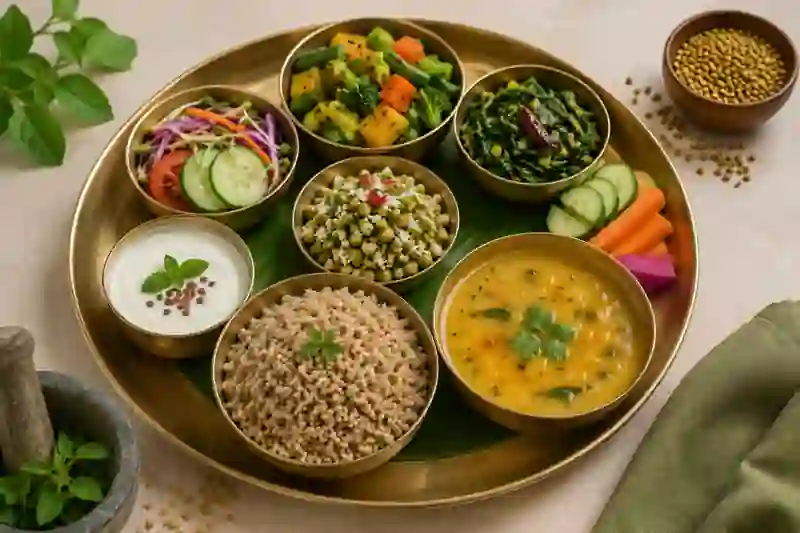
Ayurveda teaches that a truly healing meal must carry all six tastes, known as Shadrasa — Shad meaning six, and Rasa meaning taste. Each taste performs a specific function in the body and, importantly, each taste has a different effect on Agni and on your dosha. For someone managing diabetes, understanding this framework changes everything.
The six tastes are Madhura (sweet), Amla (sour), Lavana (salty), Katu (pungent), Tikta (bitter), and Kashaya (astringent). Modern nutrition speaks about proteins, fats, and carbohydrates. Ayurveda speaks about rasas. Both are pointing at the same essential truth — that variety and balance in every meal is what keeps the body well.
For a diabetic, the bitter taste (Tikta) is the most powerful ally. Bitter gourd, methi leaves, neem, and dark leafy greens actively reduce blood sugar and support liver health. Tikta taste also reduces Kapha and Pitta in the body, making it particularly valuable for Kapha-type diabetics who carry excess weight, and for Pitta types with inflammatory tendencies. Vata types should use bitter foods in moderation and always balance them with something warm and oily.
The pungent taste (Katu) — found in ginger, turmeric, black pepper, and fenugreek — directly kindles Agni and improves metabolism. This taste is most beneficial for Kapha types, who need the most digestive stimulation, and can be used moderately by Vata types. Pitta types should use pungent spices carefully and prefer cooling variants like coriander and fennel over very hot spices. Research now confirms what Ayurveda has known for centuries: fenugreek seeds soaked overnight and eaten on an empty stomach can noticeably lower fasting glucose over time.
The sour taste (Amla) stimulates Agni and improves absorption. Amla (Indian gooseberry), lemon juice, and mildly fermented foods like buttermilk are excellent daily additions for Vata and Kapha types. Pitta types should use sour foods sparingly as excess sour taste aggravates Pitta and can increase inflammation.
The sweet taste should come from complex, whole sources — millets, root vegetables, and lentils — rather than refined sugar, which creates a Kapha imbalance and worsens insulin resistance over time. All constitutions need some sweetness, but Kapha types must be most careful about the source and quantity.
When you design your plate with all six rasas in mind, you are not following a diet plan. You are practising Ahara Yoga — the yoga of food. Cravings naturally reduce, digestion improves, and your relationship with eating shifts from anxiety to nourishment.
Millets — The Ancient Grain Your Blood Sugar Needs
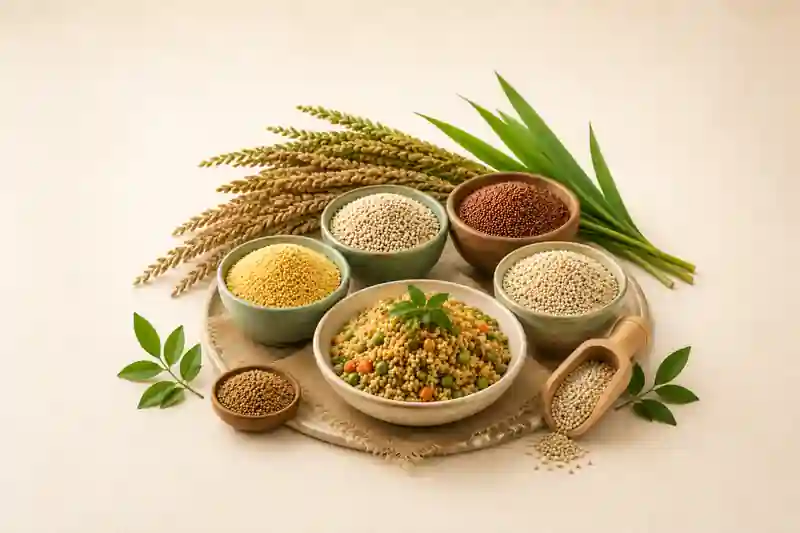
Rice and wheat have dominated Indian plates for generations. But our ancestors ate millets, and for someone managing diabetes, millets are genuinely transformative. They are low on the glycaemic index, high in fibre, rich in minerals, and gentle on the digestive system. Importantly, different millets suit different constitutions, so choose accordingly.
Bajra (Pearl Millet) has a glycaemic index of around 54 and is rich in magnesium, which directly supports insulin sensitivity. Its warming nature makes it ideal for Vata and Kapha types, particularly through the cooler months. Bajra rotis or a simple bajra khichdi make a warm, grounding lunch. Pitta types can enjoy bajra in moderation but should balance it with cooling chutneys or raita.
Ragi (Finger Millet) is high in dietary fibre, which slows glucose release into the bloodstream. Its high calcium content supports nerve health — particularly important since diabetes can affect the nervous system over time. Ragi has a slightly heavy quality, making it best suited to Vata types who need grounding, and Kapha types can enjoy it in smaller portions. A bowl of ragi porridge with a pinch of cinnamon and soaked seeds makes an ideal breakfast.
Jowar (Sorghum) is gluten-free, anti-inflammatory, and an excellent source of resistant starch. It is one of the most balancing grains across all three doshas. Jowar bhakri with a dal and a bitter sabzi is a complete, Shadrasa-aligned meal that works beautifully for Pitta types who need something anti-inflammatory and satisfying without being too heating.
Foxtail Millet (Kangni) has one of the lowest glycaemic indices among all grains, sitting around 50. Light and easy to digest, it is particularly good for Kapha types who need a low-calorie, low-GI grain option. It cooks similarly to rice and pairs well with dal or a simple vegetable curry.
Barnyard Millet (Sanwa) has the highest fibre content among all millets and is the lightest and most easily digested. It is excellent for all constitutions as a dinner grain, and is especially recommended for Kapha types in the evening when digestive fire is lowest and a heavy grain would sit poorly through the night.
Rotate your millets throughout the week rather than eating the same one every day. This reflects the yogic principle of Vairagya — non-attachment — applied to food. No single grain is a cure. Balance and rotation are.
Simple Yogic Principles for Daily Eating
Practise Mitahara — the art of moderate eating. The Hatha Yoga Pradipika advises filling the stomach half with food, a quarter with water, and leaving a quarter empty for prana to circulate freely. For diabetes specifically, this is powerful. Even healthy food, eaten in large quantities, raises blood sugar. Eat slowly, chew thoroughly, and stop before you feel completely full. Kapha types benefit the most from this practice, as their tendency is to eat beyond satiety.
Include functional foods every single day. Soak a teaspoon of fenugreek seeds overnight and eat them first thing on an empty stomach. Use bitter gourd juice two to three times a week. Add fresh ginger to your meals, cinnamon to your porridge, and a squeeze of lemon to your dal. These are not exotic remedies — they are everyday kitchen ingredients that carry deep healing intelligence.
For Kapha types specifically — avoid curd at night, cold foods, heavy sweets, and excess oil. Favour a light dinner of millet soup or steamed vegetables with warming spices. Your Agni needs the most active support, and every evening meal is an opportunity to either help or hinder it.
For Vata types specifically — never skip meals. Irregular eating is one of the most destabilising things for a Vata constitution and directly disturbs blood sugar. Eat at consistent times, favour warm and slightly oily foods, and avoid raw salads and cold smoothies, especially in the morning.
For Pitta types specifically — manage heat and stress as carefully as you manage your diet. Cooling foods like coconut water, cucumber, coriander chutney, and pomegranate are your allies. Avoid excess caffeine, alcohol, and very spicy food, all of which aggravate Pitta and increase systemic inflammation.
Stress Is Sugar Too
This is something I tell every student who comes to me with diabetes, and I want you to hear it clearly. Cortisol — the stress hormone — raises blood sugar just as surely as a piece of mithai does. Chronic stress signals the liver to release stored glucose into the bloodstream, regardless of what you are eating.
Vata types are most prone to stress-driven blood sugar spikes due to their inherently anxious and sensitive nervous system. Pitta types experience stress as intensity and perfectionism, which drives cortisol even when things appear outwardly calm. Kapha types may carry stress silently and sedentarily, which compounds metabolic sluggishness.
Pranayama practices like Nadi Shodhana (alternate nostril breathing) work across all constitutions to calm the nervous system and bring cortisol down. Bhramari (humming bee breath) is particularly soothing for Vata and Pitta. Kapalabhati (skull-shining breath) is a powerful digestive fire builder for Kapha types and should be part of their morning practice without exception. Even ten minutes of Yoga Nidra after lunch can measurably improve your post-meal blood sugar response.
The diet and the practice are one unified system. You cannot truly heal one without tending to the other.
Begin with one simple change today. Swap one meal of rice or wheat for a millet suited to your constitution. Add one bitter food to your day. Take five slow, conscious breaths before you eat. Light a small piece of fresh ginger before your lunch. The body responds to small, consistent acts of care far more than it responds to dramatic overhauls.
As we say in the tradition — Annam Brahma — food is divine. When you eat with awareness and with knowledge of your own nature, you are already healing.

Written by
Niraj Shukla
Expert in Yoga Therapy, Pranayama, Meditation & Philosophy | Postgraduate degree in Yoga Science and Philosophy | Specializing in holistic well-being |