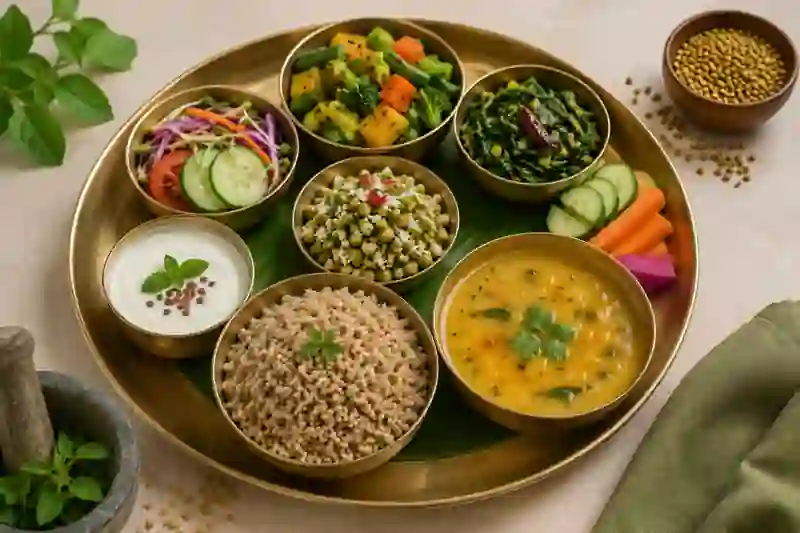
Millets: Ayurvedic Wisdom and Modern Nutrition — A Complete Guide
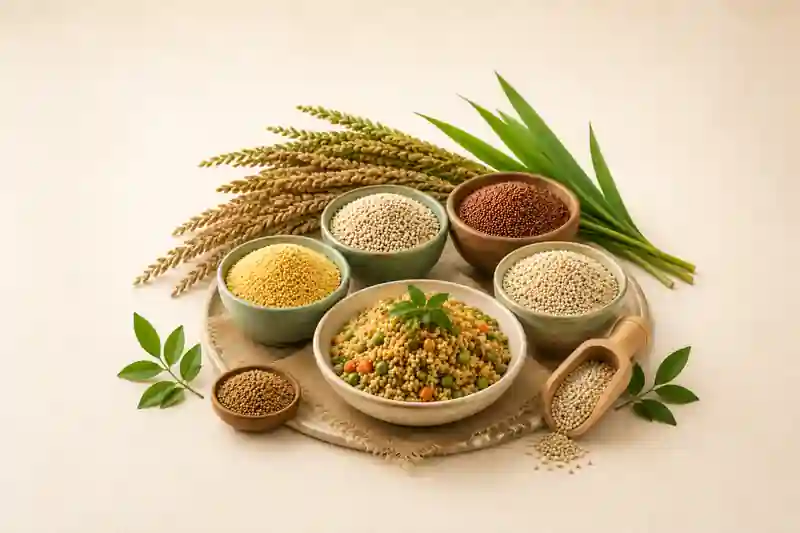
Millets are small, ancient grains that have fed civilisations for over 7,000 years. Long before rice and wheat dominated our plates, millets were the staple of Indian households — eaten across seasons, recommended by Ayurvedic physicians, and grown in soils too harsh for any other crop.
Ayurveda called them Kshudra Dhanya — minor grains, not because they are nutritionally inferior, but because they are lighter and smaller than major grains like rice and wheat. Classical texts placed them in a distinct therapeutic category: foods used to treat specific diseases, not just provide nourishment. Modern science now calls them "Nutri-Cereals" — because they pack more minerals, fiber, antioxidants, and bioactive compounds per calorie than any common staple grain. The United Nations declared 2023 the International Year of Millets. Both ancient wisdom and modern research agree — these are powerful therapeutic foods.
But their benefits depend entirely on which millet you choose, which season you eat it in, how you prepare it, and what your body needs. Eaten wrongly, the same grain that heals can harm. This guide covers all of that.
General Overview
Ayurvedic profile (applicable to most millets):
Taste (Rasa): Astringent (Kashaya) and Sweet (Madhura)
Quality (Guna): Light (Laghu) and Dry (Ruksha)
Potency (Veerya): Cooling (Sheeta) — except Bajra, Little Millet, and Proso which are warming
Post-digestive effect (Vipaka): Pungent (Katu) — stimulates digestion
Action: Lekhana (scraping fat), Kledashoshana (drying excess moisture)
Dosha effect: Pacify Kapha and Pitta. Increase Vata — this applies to all millets unless prepared with ghee or oil
Because millets dry up excess fat and moisture, Ayurveda classifies them as therapeutic for Santarpanajanya Vyadhi — diseases of over-nutrition like obesity and diabetes.
Modern science confirms: Millets are rich in fiber, calcium, iron, magnesium, B vitamins, and polyphenols. They are gluten-free, alkaline-forming, and have a low to medium glycemic index (avg. GI 52.7 vs rice at 73 and wheat at 72).
Nutritional Comparison: Millets vs Wheat and Rice
(Values per 100g, raw grain. Approximate.)
White Rice — Protein 6.8g · Carbs 79g · Fat 0.5g · Fiber 0.4g · Calcium 28mg · Iron 0.8mg · GI 73
Brown Rice — Protein 7.9g · Carbs 77g · Fat 2.9g · Fiber 3.5g · Calcium 23mg · Iron 2.2mg · GI 68
Wheat — Protein 13.7g · Carbs 71g · Fat 2.5g · Fiber 12.2g · Calcium 34mg · Iron 3.5mg · GI 72
Finger Millet / Ragi — Protein 7.3g · Carbs 72g · Fat 1.3g · Fiber 3.6g · Calcium 344mg · Iron 3.9mg · GI 68
Pearl Millet / Bajra — Protein 10.6g · Carbs 67g · Fat 5.0g · Fiber 1.2g · Calcium 42mg · Iron 8.0mg · GI 55
Foxtail Millet — Protein 12.3g · Carbs 61g · Fat 4.3g · Fiber 8.0g · Calcium 31mg · Iron 2.8mg · GI 50
Sorghum / Jowar — Protein 10.4g · Carbs 73g · Fat 1.9g · Fiber 2.0g · Calcium 25mg · Iron 4.1mg · GI 55
Barnyard Millet — Protein 6.2g · Carbs 66g · Fat 2.2g · Fiber 9.8g · Calcium 11mg · Iron 5.0mg · GI 50
Kodo Millet — Protein 8.3g · Carbs 66g · Fat 1.4g · Fiber 9.0g · Calcium 27mg · Iron 0.5mg · GI 50
Proso Millet — Protein 12.5g · Carbs 70g · Fat 1.1g · Fiber 2.2g · Calcium 14mg · Iron 0.8mg · GI 71
Little Millet — Protein 7.7g · Carbs 67g · Fat 4.7g · Fiber 7.6g · Calcium 17mg · Iron 9.3mg · GI 52
Amaranth — Protein 14.0g · Carbs 65g · Fat 7.0g · Fiber 6.7g · Calcium 159mg · Iron 7.6mg · GI 35
Key takeaways from the table:
Ragi wins on calcium — by a huge margin. No other cereal comes close.
Amaranth wins on protein, GI, and iron — and is a complete protein (contains all essential amino acids).
Little Millet has the highest iron of the true millets.
Barnyard and Kodo have the most fiber — better than wheat.
All millets beat white rice on every nutritional measure.
Most millets beat wheat on glycemic index.
Proso has a GI close to wheat — not a low-GI grain.
Why Millets Spike Blood Sugar Less Than Wheat — Despite Similar Carb Numbers
The nutrition table shows millets and wheat have comparable carbohydrates. Yet millets consistently have a lower GI. The reason is not just fiber quantity — it is how the entire grain is structured.
1. Starch type differs. Wheat is high in amylopectin — a branched starch that digestive enzymes break down rapidly. Millets are higher in amylose — a linear starch that digests slowly and releases glucose gradually.
2. Built-in enzyme blockers. Millets are rich in phytates, tannins, and polyphenols that physically block amylase (the enzyme that breaks down starch) from accessing starch quickly. Wheat has far fewer of these compounds.
3. No gluten — slower digestion. Wheat's gluten network helps starch gelatinize, making it more accessible to enzymes. Millets have no gluten — the food matrix stays more intact, slowing starch release into the bloodstream.
4. Type of fiber matters more than quantity. Whole wheat has comparable total fiber — but millet fiber is predominantly viscous and soluble, which forms a gel in the gut and slows glucose absorption. Wheat fiber is mostly insoluble, which adds bulk but does not slow glucose absorption significantly.
5. Protein-starch binding. Millet proteins bind tightly with starch granules, creating a physical barrier against digestive enzymes.
The bottom line: the fiber number on a nutrition label does not tell the full story. Starch structure, fiber type, and anti-nutrient compounds all work together — and millets win on all fronts despite similar macro numbers. This is why Ayurveda's ancient classification of millets as therapeutic for Prameha (diabetes) aligns precisely with what modern glycemic research now confirms.
The 10 Millets — A Complete Guide
A note on dosha assignments: The following dosha effects are based on classical Ayurvedic texts — primarily Charaka Samhita, Ashtanga Hridayam, and Bhavaprakasha Nighantu. All millets increase Vata to some degree due to their dry, light nature. This is not removed by the millet — it is managed through preparation (ghee, soaking, warming spices).
1. Finger Millet (Ragi / Nartaki)
Best Usage Daily bone nourisher. Ayurveda calls it Balya (strength-giving) and Brihana (tissue-nourishing). Recommended for infants, elderly, and pregnant women. Best cereal source of calcium — far above rice or wheat.
Best Season: Summer and Autumn
Best For Diseases Osteoporosis and bone weakness (highest cereal calcium), anaemia (good iron), hyperacidity and bleeding disorders (cooling Pitta), skin inflammation, general weakness, improving breast milk production.
Ayurvedic Dosha Effect (Per Ashtanga Hridayam and Bhavaprakasha) Pacifies Pitta and Kapha. Sheeta (cooling), Snigdha (slightly unctuous). Unlike most millets, its slight oily quality makes it less aggressively drying — it increases Vata mildly compared to others. Adding milk or ghee largely neutralises this.
Cons Dry preparations can cause constipation. High fiber may cause bloating in very weak digestion.
Avoid In Severe Vata conditions and chronic constipation without ghee or milk preparation.
2. Pearl Millet (Bajra)
Best Usage The winter millet. Ushna (warming), Balya (strength-giving), and Laghu (light). Provides warmth, iron, and energy. Good for physically active people in cold climates.
Best Season: Winter only
Best For Diseases Iron-deficiency anaemia, general weakness, low energy, respiratory congestion from cold and Kapha, constipation.
Ayurvedic Dosha Effect (Per Charaka Samhita and Raja Nighantu) Ushna (heating), Laghu (light). Pacifies Kapha. Increases Vata (dry nature) and can increase Pitta (heating nature) in excess. Not suited to Pitta or Vata types without careful preparation.
Cons Heating — aggravates Pitta in summer. Drying without ghee. High goitrogenic activity among millets.
Avoid In Summer. Hyperacidity, skin inflammation, Pitta-dominant conditions. Daily use by those with thyroid conditions.
3. Foxtail Millet (Kangu / Kangni)
Best Usage Fracture healer and tissue nourisher. Ayurveda specifically calls it Sandhankar (fracture-healing) and Brumhana (tissue-nourishing). High protein (12.3g/100g). Also improves blood sugar control.
Best Season: Monsoon and Summer
Best For Diseases Fractures and bone injuries (Bhagnasandhanakrit — rejoins broken bones), diabetes (reduces hyperinsulinemia, improves glycemic control), obesity (scraping action), inflammatory conditions (anti-inflammatory polyphenols in bran), general weakness and emaciation.
Ayurvedic Dosha Effect (Per Charaka Samhita, Ashtanga Hridayam) Sheeta (cooling), Ruksha (dry), Laghu (light), Katu Vipaka. Pacifies Kapha and Pitta. Increases Vata — it is explicitly listed as Vatala (Vata-aggravating) in classical texts. Its Brumhana (nourishing) and Guru (somewhat heavy) qualities provide tissue nourishment, but this does not make it safe for Vata types without ghee preparation. It is not a Vata-balancing grain. Prepare always with ghee or oil.
Cons Dry preparations increase Vata — causing constipation and joint stiffness. Classical texts differ on its potency in some editions, but Sheeta (cooling) is the dominant consensus.
Avoid In Never mix with milk — Viruddha Ahara (incompatible combination), causes severe indigestion. Avoid dry preparations entirely.
4. Sorghum (Jowar / Yavnala)
Best Usage Cooling and light. Ayurveda describes it as Ruchya (appetite-improving) and Trishghna (relieves excessive thirst) — classic signs of Pitta pacification. Modern research shows it blocks carbohydrate-digesting enzymes.
Best Season: Summer and Autumn
Best For Diseases Diabetes (inhibits alpha-glucosidase and alpha-amylase — enzymes that convert carbs to sugar), high cholesterol and cardiovascular risk, hyperacidity and excessive thirst, skin inflammation, obesity (high tannin content extends satiety).
Ayurvedic Dosha Effect (Per Bhavaprakasha Nighantu and Charaka Samhita) Sheeta (cooling), Laghu (light), Ruksha (dry). Pacifies Kapha and Pitta. Increases Vata. Considered Avrishya (reduces reproductive vitality) in classical texts with regular heavy use.
Cons Highest tannin content of all millets — tannins reduce iron and zinc absorption. Drying — worsens Vata conditions without ghee.
Avoid In Osteoarthritis and Vata conditions without ghee. Avoid excess by those with reproductive health concerns.
5. Barnyard Millet (Sama / Shyamaka / Sanwa)
Best Usage Gentlest and most digestible millet. Ayurveda calls it Sangrahi (absorbent) — ideal even for the sick and recovering. Low fat, high fiber, simple digestible starch. Traditional fasting food in India.
Best Season: Spring and Autumn
Best For Diseases Diarrhoea and IBS (absorbs excess fluid, solidifies stools), obesity and weight loss (strong scraping and drying), weak digestion and illness recovery, spring Kapha cleansing.
Ayurvedic Dosha Effect (Per Ashtanga Hridayam and Sushruta Samhita) Sheeta (cooling), Ruksha (dry), Laghu (light). Strongly pacifies Kapha and Pitta. Increases Vata more aggressively than most millets due to its strong drying nature.
Cons Strong dryness depletes joint fluid quickly. Causes constipation without fat. In children, excess promotes catabolism — breaking down tissue rather than building — which hinders growth.
Avoid In Children in large amounts. Osteoarthritis. Chronic constipation without ghee.
6. Kodo Millet (Kodrava)
Best Usage Most therapeutically targeted millet for diabetes and wound care. Recommended directly as a rice substitute for diabetics in classical texts. Contains quercetin and ferulic acid — proven to reduce glucose absorption and improve insulin function.
Best Season: Spring and Autumn
Best For Diseases Type 2 diabetes, obesity (scrapes fat from channels), wounds and skin ulcers, IBS and diarrhoea, toxic conditions (Vishahara — anti-poisonous property).
Ayurvedic Dosha Effect (Per Charaka Samhita and Dhanvantari Nighantu) Sheeta (cooling), Ruksha (dry), Kashaya (astringent). Pacifies Kapha and Pitta. Increases Vata. Considered Avrishya (reduces reproductive vitality) with long-term heavy use. Wild Kodo (Uddalak) is Tridosha-vitiating and unsafe.
Cons Wild Kodo develops intoxicating properties — never consume. Regular Kodo in excess without fat increases Vata significantly.
Avoid In Wild variety entirely. Vata-dominant conditions without ghee. Some classical texts caution against rainy-season harvested Kodo for diabetics.
7. Proso Millet (Cheena / Varaka)
Best Usage Fracture healing and cardiac support. Classified as Bhagnasandhanakara — rejoins broken bones. Rich in thiamine (B1), phosphorus, and magnesium — supports heart muscle function and bone matrix.
Best Season: Winter
Best For Diseases Fractures and bone injuries, cardiac weakness (thiamine for heart muscle), recovery from illness.
Ayurvedic Dosha Effect (Per Charaka Samhita and Bhavaprakasha — Proso is listed as Chinak/Varak) Ushna (heating), Guru (heavy). Classified as Tridoshakar — disturbs all three doshas. Sweet taste with sour Vipaka increases Pitta. Heavy and heating affects Kapha. Drying quality affects Vata. Not recommended for daily use in any classical text. Use only medicinally for fractures and cardiac support.
Cons Tridosha-vitiating. Can cause excess urination and loose stools. Not a grain for regular consumption.
Avoid In Never with milk, curd, buttermilk, or oil — linked to Ekakushta (psoriasis) in classical texts. Daily use by anyone.
8. Adlay Millet (Gavedhuka)
Best Usage Most aggressively weight-reducing millet. Ayurveda uses the term Karshyakar — it induces therapeutic fat loss. Used when other millets are insufficient for significant weight reduction.
Best Season: Spring and Summer
Best For Diseases Obesity, high Kapha disorders (excess mucus, heaviness, sluggishness), over-nutrition diseases.
Ayurvedic Dosha Effect (Per Charaka Samhita) Ruksha (dry), Laghu (light). Strongly pacifies Kapha and Pitta. Increases Vata significantly — the most drying of all millets.
Cons Most drying millet — rapidly depletes joint fluid. Not for thin, dry, or Vata-dominant individuals.
Avoid In Vata-dominant conditions and osteoarthritis. Some classical texts list it as contraindicated for managing diabetes. Not for children.
9. Little Millet (Kutaki / Samai)
Best Usage Warming yet light — a rare combination. One of the safest millets for sensitive digestion. Good transitional millet for people moving from refined grains. High iron relative to its size.
Best Season: Winter and Spring
Best For Diseases Anaemia (high iron at 9.3mg/100g — highest among true millets), constipation (gentle fiber), diabetes (low GI ~52), weight management, recovery from illness.
Ayurvedic Dosha Effect (Per Raja Nighantu and Bhavaprakasha) Ushna (heating), Laghu (light). Pacifies Kapha. Mildly increases Pitta in excess. Less aggressively Vata-increasing than Barnyard or Kodo — making it relatively safer for Vata types in moderate amounts with ghee.
Cons Warming nature increases Pitta in summer. Limited modern research. Less widely available.
Avoid In Summer excess and Pitta-dominant individuals with acidity or skin inflammation.
10. Amaranth (Rajgira / Ramdana)
Best Usage The most nutritionally complete grain here — a complete protein containing all essential amino acids, including lysine which most grains lack. Ayurveda calls it Rajgira (king's grain), Balya (strength-giving), and Snigdha (slightly oily) — qualities that make it one of the few grains that nourishes rather than dries Vata.
Best Season: Winter and Autumn
Best For Diseases Protein deficiency and muscle weakness (14g protein/100g — highest here), anaemia (iron and folate), bone weakness (calcium and magnesium), celiac disease (gluten-free), high cholesterol (squalene and plant sterols lower LDL), cardiovascular health, diabetes (lowest GI among all — ~35), children and athletes needing plant protein.
Ayurvedic Dosha Effect (Amaranth as Rajgira in Ayurvedic tradition — classified as a sacred grain, Guru and Snigdha) Guru (heavy), Snigdha (slightly oily), Madhura (sweet). Pacifies Vata and Pitta. Can mildly increase Kapha in excess due to its heavier, moist nature. Uniquely safe for Vata types — one of the few grains that does not increase dryness.
Cons Heavier than most millets — can cause bloating in weak digestion. Contains oxalates — caution for kidney stone tendency. More calorie-dense — not ideal for aggressive weight loss in large amounts.
Avoid In Kidney stone conditions. Kapha-dominant individuals in large amounts. Those with very weak digestion should start with small quantities.
Best Millet by Season
Winter (Hemanta / Shishira) Cold and dry — body needs warmth and dense nourishment. Best: Bajra, Proso, Little Millet, Amaranth
Spring (Vasanta) Cool and damp — Kapha accumulates. Body needs light, drying foods. Best: Barnyard, Kodo, Bajra, Foxtail
Summer (Grishma) Hot and dry — Pitta rises. Body needs cooling, hydrating foods. Best: Ragi, Jowar, Foxtail
Monsoon (Varsha) Humid — digestion weakens. Body needs light, warm, easy food. Best: Foxtail
Autumn (Sharad) Warm and transitional — Pitta still elevated. Cooling foods needed. Best: Jowar, Barnyard, Kodo, Foxtail, Amaranth
Best Millet by Disease
Diabetes (Type 2)
Best: Kodo, Foxtail, Jowar, Barnyard
Why (Ayurveda): These millets are Ruksha and have Lekhana action — they dry up the excess moisture (Kleda) and fat that are the Ayurvedic root of diabetes (Prameha — a Kapha disorder).
Why (Modern Science): Kodo contains quercetin and ferulic acid that reduce glucose absorption and boost insulin secretion. Jowar blocks alpha-glucosidase and alpha-amylase — enzymes that break carbs into sugar. Foxtail reduces hyperinsulinemia and increases leptin (hunger-suppressing hormone). All have high fiber that slows starch digestion, preventing blood sugar spikes. Over three months of millet-based diet significantly reduces HbA1c and fasting glucose.
Avoid: Adlay, Proso, and rainy-season harvested varieties per classical texts. Wild Kodo entirely.
Obesity
Best: Barnyard, Kodo, Adlay, Jowar, Foxtail
Why (Ayurveda): Lekhana (scraping) action removes accumulated fat from body channels. Kledashoshana dries up excess moisture. Katu Vipaka stimulates sluggish digestion common in obesity.
Why (Modern Science): High fiber provides prolonged satiety — you feel full on fewer calories. Jowar's tannins delay gastric emptying. Foxtail increases leptin. Lower caloric density than rice or wheat.
Avoid: Proso (heavy and Tridosha-vitiating). Bajra and Amaranth in large amounts add significant calories.
Bone Health and Fractures
Best: Ragi (daily strength), Foxtail and Proso (fracture healing)
Why (Ayurveda): Ragi is Balya — nourishes Asthi Dhatu (bone tissue). Foxtail and Proso are Bhagnasandhanakara — classical texts specifically describe them as grains that rejoin broken bones.
Why (Modern Science): Ragi has 344mg calcium per 100g — highest of any cereal. Foxtail provides calcium, phosphorus, and lysine for collagen synthesis (the protein scaffold of bone). Foxtail prevents osteoclastic activity (bone breakdown) while promoting osteoblastic activity (bone formation). Proso provides phosphorus and magnesium for hydroxyapatite — the mineral that makes bones hard.
Avoid: All millets in excess without ghee — drying nature increases Vata, which in Ayurveda directly depletes bone tissue (Asthisaushirya). Also depletes synovial joint fluid, worsening osteoarthritis.
Heart Health / High Cholesterol
Best: Jowar, Bajra, Proso
Why (Ayurveda): Scraping action clears fatty deposits from body channels — Ayurveda's model of arterial pathways.
Why (Modern Science): Jowar and Bajra reduce LDL cholesterol. Jowar inhibits cholesterol-synthesising enzymes. Proso thiamine (B1) supports heart muscle energy metabolism. Fiber binds to bile acids in the gut, reducing cholesterol reabsorption. Amaranth's squalene and plant sterols also lower LDL.
Avoid: All millets in excess without fat — severe dryness can cause vasoconstriction (blood vessel tightening), which Ayurveda links to cardiac ischemia.
Diarrhoea / IBS
Best: Barnyard, Kodo
Why (Ayurveda): Both are Sangrahi (absorbent) — absorb excess fluid from the gut, solidify loose stools, and soothe the intestinal lining.
Why (Modern Science): Barnyard's simple digestible starch is gentle on an inflamed gut. Insoluble fiber adds bulk and normalises bowel movement. Kodo's astringent compounds have a binding, anti-inflammatory effect on gut lining.
Avoid: Foxtail with milk (indigestion). Proso with milk or curd (causes skin and digestive distress). Heavy or incompatible combinations worsen an already compromised gut.
Skin Conditions
Best: Jowar, Foxtail, Ragi, Kodo
Why (Ayurveda): Cooling millets pacify Pitta — the dosha underlying most inflammatory skin conditions. Kodo's drying action removes excess moisture (Kleda) that underlies many weeping skin conditions. Foxtail has Dahagna property — relieves burning sensations.
Why (Modern Science): Polyphenols and flavonoids reduce systemic inflammation — a root driver of skin conditions. Kodo extract shown to have wound-healing properties. Foxtail bran polyphenols suppress pro-inflammatory cytokines.
Avoid: Proso with milk, curd, buttermilk, or oil — specifically linked to Ekakushta (psoriasis) in classical texts. Any millet in excess without fat — worsens dry, cracking, or scaly skin.
Osteoarthritis / Joint Pain
Avoid most millets or use only with ghee.
Why (Ayurveda): Millets deplete Shleshaka Kapha — the lubricating fluid of joints. Less lubrication means more friction, accelerating joint wear. Barnyard, Kodo, and Adlay are the most aggressively drying — most harmful to joints.
Why (Modern Science): Chronic dry, low-fat diets reduce anti-inflammatory lipid compounds in joint tissue, increasing degradation.
If unavoidable: Use Ragi with milk or ghee — it is the least aggressively drying millet and provides calcium to support joint and bone tissue.
Thyroid (Hypothyroidism)
Caution with all millets in daily use.
Millets contain goitrogens — compounds that interfere with iodine absorption. Thyroid hormone production depends on iodine. Daily millet consumption without adequate iodine intake may gradually worsen hypothyroidism.
Practical approach: Eat millets 3–4 times a week, not daily. Always include iodine-rich foods: iodized salt, dairy, eggs, seaweed. Monitor thyroid markers. Bajra has the most notable goitrogenic activity among millets.
Which Millet for Your Body Type (Dosha)
Vata Type
Dry, cold, light, irregular digestion, cracking joints, anxious.
Best: Amaranth (nourishes without drying), Ragi with milk or ghee. Foxtail only with generous ghee and not daily.
Always: Cook every millet with ghee or sesame oil. Soak before cooking. Add ginger, fennel, coriander. Eat as warm, moist porridge or khichdi — not dry rotis.
Avoid: Barnyard, Kodo, and Adlay (too drying). Any millet without fat.
Pitta Type
Hot, sharp, prone to acidity, skin rashes, inflammation.
Best: Ragi, Jowar, Barnyard — all cooling.
Always: Add fennel and coriander (cooling spices). A little ghee or coconut oil. Ragi dosa with coconut chutney is an ideal preparation.
Avoid: Bajra and Little Millet in summer (heating). Proso in excess.
Kapha Type
Heavy, slow, weight gain, mucus, sluggish digestion.
Best: Barnyard, Kodo, Adlay, Jowar — all drying and scraping.
Always: Minimal fat — water-based porridge over milk preparations. Add black pepper, ginger, turmeric. Use dry-cooking methods.
Avoid: Amaranth and Proso in large amounts — too heavy and nourishing for an already heavy constitution.
The Cons — What Millets Can Do Wrong
Joint dryness — Depletes synovial fluid, worsens arthritis. Most severe with Barnyard, Kodo, and Adlay.
Constipation — Hard, dry stools without adequate fat in preparation.
Skin dryness — Cracking, itching, scaling from excess Vata. Any millet in excess without ghee.
Vasoconstriction — Extreme dryness can gradually tighten blood vessels over time.
Children — High fiber causes fullness before adequate calorie intake. Can hinder growth in excess.
Thyroid — Goitrogens in most millets may block iodine absorption. Most pronounced with Bajra.
Foxtail + milk — Severe indigestion. Incompatible combination (Viruddha Ahara) per classical texts.
Proso + milk / curd / oil — Linked to psoriasis (Ekakushta) in classical Ayurvedic texts.
Kodo or Proso in excess — Can disturb all three doshas. Not for daily use.
Anti-Nutrients: What Blocks the Goodness
Millets are mineral-rich — but contain compounds that partially block absorption of those same minerals. The solution lies entirely in preparation.
The four anti-nutrients:
Phytates — Present in all millets. Bind to calcium, iron, and zinc, reducing absorption. The most widespread concern. Ragi has the highest cereal calcium, yet phytates reduce how much actually reaches bone. Bajra is recommended for anaemia, yet unsoaked preparations deliver far less iron than the numbers suggest.
Tannins — Highest in Jowar, also in Kodo and Adlay. Block protein and mineral absorption — especially iron and zinc. Double-edged in Jowar: the same tannins that slow digestion (good for diabetes and satiety) also reduce mineral yield.
Goitrogens — Present in most millets, highest in Bajra. Interfere with iodine absorption — relevant mainly for those with thyroid conditions eating millets daily. Moderate intake with adequate iodine-rich foods in the diet is generally considered safe.
Oxalates — Most relevant in Amaranth. Bind calcium in the gut. Concern for kidney stone tendency. Largely removed by boiling in excess water and discarding the water.
How to reduce anti-nutrients — in order of effectiveness:
Sprouting / Malting — most effective. Traditional Ragi malt (ambali/sattu) is exactly this.
Fermentation — excellent. Ragi dosa, millet idli, kanji.
Soaking overnight — minimum every time. Reduces phytates by 30–60%. Always discard soaking water.
Boiling in excess water — effective for oxalates in Amaranth.
Always soak before cooking. The difference in mineral absorption between soaked and unsoaked millets is significant.
How to Prepare Millets
Soak — minimum 6–8 hours, discard water
Cook with fat — ghee or oil every time, no exceptions for Vata types
Add balancing spices — fennel and coriander for all body types; ginger for Kapha and Vata
Choose moist preparations — porridge, khichdi with lentils, kanji — over dry rotis
Rotate varieties — do not eat the same millet daily; rotate across the week and season
Should You Switch Completely to Millets?
No.
Ayurveda classified millets as minor grains — therapeutic adjuncts, not staple replacements.
Switch to millets if you have: Diabetes, obesity, celiac disease, high cholesterol, or Kapha-dominant digestion.
Do not switch completely if you have: Osteoarthritis, hypothyroidism, chronic dryness, constipation, or if you are a child or trying to gain significant weight.
Best approach: Eat millets 3–5 times a week. Rotate by season. Always soak and cook with ghee. Match the millet to your body type and season.
Quick Reference — All 10 Millets
Finger Millet (Ragi) Best for: Bones, cooling, strength, anaemia Best season: Summer, Autumn Dosha: ↓ Pitta, Kapha / ↑ Vata mildly Avoid: Dry preparations; constipation
Pearl Millet (Bajra) Best for: Winter warmth, anaemia, low energy Best season: Winter only Dosha: ↓ Kapha / ↑ Pitta, Vata Avoid: Summer; Pitta conditions; thyroid patients daily
Foxtail Millet (Kangu) Best for: Fractures, diabetes, emaciation Best season: Monsoon, Summer Dosha: ↓ Kapha, Pitta / ↑ Vata Avoid: With milk; dry preparations
Sorghum (Jowar) Best for: Cooling, heart, diabetes, skin Best season: Summer, Autumn Dosha: ↓ Kapha, Pitta / ↑ Vata Avoid: Excess in Vata types without ghee
Barnyard Millet (Sama) Best for: Weight loss, IBS, weak digestion Best season: Spring, Autumn Dosha: ↓ Kapha, Pitta / ↑ Vata strongly Avoid: Children in excess; osteoarthritis
Kodo Millet (Kodrava) Best for: Diabetes, wounds, weight loss Best season: Spring, Autumn Dosha: ↓ Kapha, Pitta / ↑ Vata Avoid: Wild variety entirely; Vata without ghee
Proso Millet (Cheena) Best for: Fractures, cardiac weakness Best season: Winter Dosha: Tridoshakar — use medicinally only Avoid: With milk, curd, or oil; daily use
Adlay Millet (Gavedhuka) Best for: Obesity, Kapha excess Best season: Spring, Summer Dosha: ↓ Kapha, Pitta / ↑ Vata strongly Avoid: Vata types; osteoarthritis; some diabetics
Little Millet (Kutaki) Best for: Anaemia, gentle digestion, diabetes Best season: Winter, Spring Dosha: ↓ Kapha / ↑ Pitta mildly Avoid: Summer excess; Pitta conditions
Amaranth (Rajgira) Best for: Protein, cholesterol, Vata nourishment, children Best season: Winter, Autumn Dosha: ↓ Vata, Pitta / ↑ Kapha mildly Avoid: Kidney stones; Kapha excess in large amounts
Millets are not a trend. They are time-tested food medicine. The key is not eating more of them — it is eating them wisely, seasonally, and with the right preparation

Written by
Niraj Shukla
Expert in Yoga Therapy, Pranayama, Meditation & Philosophy | Postgraduate degree in Yoga Science and Philosophy | Specializing in holistic well-being |