Yoga Asanas You Should Avoid with High Blood Pressure
Living with Hypertension requires a mindful approach to exercise—including yoga. While many yoga practices can help reduce stress and support heart health, some poses may increase blood pressure or strain the cardiovascular system.
Understanding which asanas to avoid can help you practice yoga safely and effectively.
1.
Sirsasana
(Headstand)
Headstand is an advanced inversion where the body is completely upside down.
Why to Avoid:
Causes a sudden surge of blood flow to the head
May increase intracranial and blood pressure
Risk of dizziness or imbalance
Safer Alternative:
Choose calming poses like Balasana.
2.
Sarvangasana
(Shoulder Stand)
This inversion places pressure on the neck and upper body.
Why to Avoid:
Temporarily raises blood pressure
Compresses chest and neck
Can strain the heart
Safer Alternative:
Try Viparita Karani, a gentler option.
3.
Adho Mukha Vrksasana
(Handstand)
A physically demanding pose requiring strength and balance.
Why to Avoid:
Increases heart rate and pressure
Sudden shifts in circulation
Risk of falls if you feel lightheaded
Safer Alternative:
Practice Sukhasana with deep breathing.
4.
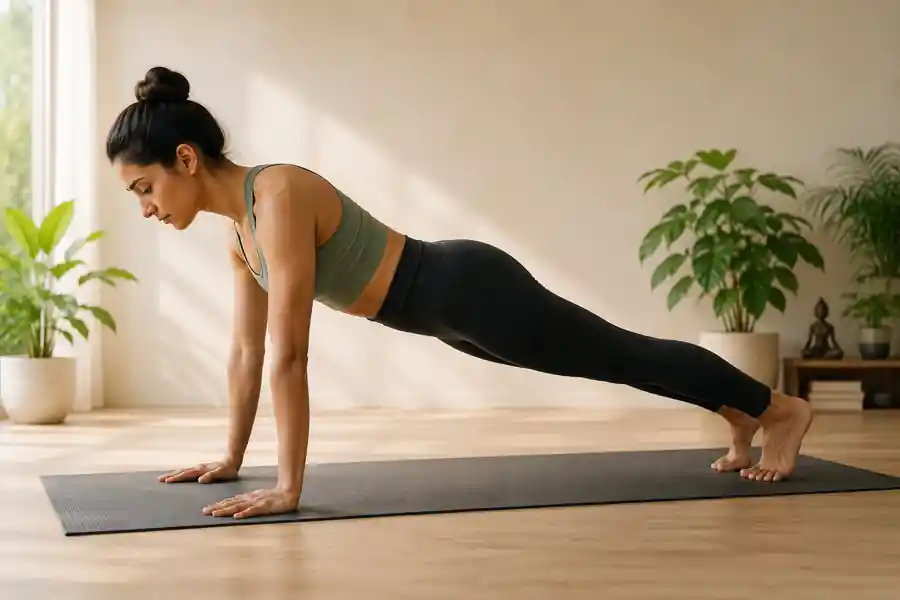
Chaturanga Dandasana
(Low Plank)
Common in dynamic yoga flows, this pose requires sustained strength.
Why to Avoid:
Can spike blood pressure during exertion
Often part of fast-paced sequences
Adds strain on the heart
Safer Alternative:
Opt for slow, controlled movements or supported poses.
5.
Chakrasana
(Wheel Pose)
Chakrasana is a deep backbend that opens the chest and requires significant strength and flexibility.
Why to Avoid:
Intense stretch can elevate heart rate and blood pressure
Puts pressure on the chest and cardiovascular system
May cause dizziness, especially in beginners
Safer Alternative:
Try gentle backbends like Setu Bandhasana.
6.
Kapalbhati Pranayama
(Forceful Breathing)
A rapid breathing technique often used for detox and energy.
Why to Avoid:
Involves forceful exhalation
Activates the stress response
May elevate blood pressure
Safer Alternative:
Stick to slow, deep breathing techniques.
General Yoga Tips for High Blood Pressure
If you have Hypertension, keep these guidelines in mind:
Avoid long or intense inversions
Skip fast-paced or power yoga styles
Never hold your breath during poses
Focus on gentle, restorative practices
Practice under guidance if you’re unsure
Final Thoughts
Yoga can be a powerful tool for managing high blood pressure—but only when practiced wisely. Avoiding high-intensity poses, inversions, deep backbends like Chakrasana, and forceful breathing techniques can help you stay safe while still enjoying the benefits of relaxation and mindfulness.
A gentle, consistent yoga routine combined with medical care and a healthy lifestyle can go a long way in supporting overall well-being.

Written by
Niraj Shukla
Expert in Yoga Therapy, Pranayama, Meditation & Philosophy | Postgraduate degree in Yoga Science and Philosophy | Specializing in holistic well-being |